School pickup queues strain vehicle air conditioning systems, causing warm cabin temperatures and high thermal loads during low-speed idling. We know how restricted airflow, reduced alternator output, and high ambient heat impact your car. Professional diagnostic and preventative maintenance services keep your climate control system operating reliably through every warm weather season.
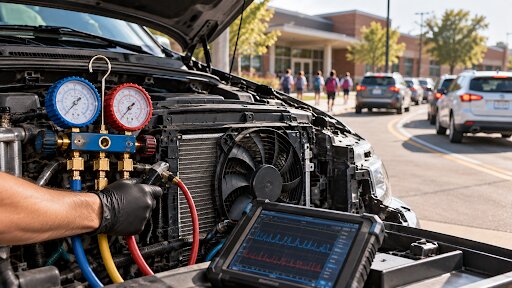
Low-speed school pickup queues along Meridian roads subject vehicle cooling systems to sustained thermal stress. Waiting forty minutes near Paramount Elementary with the transmission in drive creates high heat loads while the compressor spins too slowly to reject heat. When I hook up the scope to the electronic control valve circuit on a stalled compressor during a 95°F Meridian afternoon, I look for a flatlined 0.8A command signal. If the duty cycle stays pinned there while high-side pressure hits 350 PSI, the variable displacement valve is mechanically sticking from thermal soak, not suffering from a low refrigerant charge.
Primary Symptoms of Low-Speed AC Failure
- Cabin warming during long idles: Cabin air turning warm during long stationary periods indicates poor refrigerant flow and inadequate condenser cooling.
- Immediate temperature spikes: Drivers notice sudden heat when moving from highway speeds directly into slow-moving queue lines.
- Fluctuating blower motor speeds: Blower speeds fluctuate as electrical voltage drops from reduced alternator output.
- Reduced defrost performance: Defrost performance suffers simultaneously because moisture removal relies on consistent evaporator core chilling.
Mechanics of Car AC Failure During Extended Idling
Vehicle air conditioning relies on engine speed to drive the refrigerant compressor. At idle speeds around 600 revolutions per minute, belt rotation drops compressor displacement and refrigerant mass flow stalls. Stagnant airflow across the condenser core prevents proper heat rejection. Summer heat above 90 degrees forces system pressures to spike, causing the air conditioning to turn off completely.
Electrical demand during long idle periods further stresses the charging system. Cooling fans run full blast while slow alternators produce less power, draining the battery and making the cabin fan blow weaker.
Diagnostic Testing Procedures for Intermittent Car AC Issues
Instead of guessing with generic recharge cans, proper troubleshooting requires monitoring live data streams and physical system behavior under load:
- Pinpoint intermittent idle cooling failures by monitoring live data streams instead of relying solely on static refrigerant pressures.
- Hook up advanced diagnostic scanners to observe evaporator core temperature sensors and manually command high-speed cooling fan states.
- Conduct idle testing by holding the engine at idle for twenty minutes while logging compressor control current and discharge pressures.
- Identify failing control valves that display erratic duty cycle responses as compartment temperatures soak upward.
- Perform voltage drop tests across the blower motor circuit to uncover hidden resistance in aging wiring harnesses.
- Verify exact mass charges down to the ounce using refrigerant recovery and recharge procedures to catch subtle leaks that appear only under extreme thermal expansion cycles.
How Prolonged Idling Impacts Battery and Charging Health
Sustained low-speed operation forces electrical accessories to draw heavily from stored battery capacity. Alternator stators generate minimal magnetic field strength at 600 revolutions per minute, leaving total vehicle demand to outstrip generation capacity. Cooling fans, fuel injectors, ignition coils, and climate control blowers combine to consume significant amperage.
Repeated deep-discharge cycles sulfate lead-acid battery plates prematurely, shortening service life significantly. Modern vehicle computer modules manage load-shedding protocols to protect sensitive electronics, which intentionally cuts power to comfort systems when state of charge drops past calibrated thresholds.
Preventative Maintenance for Stop-and-Go Traffic
Upgrading cooling system maintenance schedules prevents sudden climate control failures during peak summer heat waves:
- Clean condenser fins using specialized chemical washes and compressed air to remove built-up road debris and insect blockages.
- Replace cabin air filters to maintain unrestricted airflow across the evaporator core and optimize heat transfer efficiency.
- Inspect serpentine belts and tensioner pulleys to ensure zero slip occurs at low pulley speeds.
- Upgrade weak batteries to units with higher reserve capacity, preventing voltage starvation during extended stationary periods in traffic queues.
Professional Climate Control Services
Waiting until total system failure occurs turns a simple preventative service into an expensive compressor replacement bill. Dealership backlogs often leave drivers sweating through the entire warm season while generic service chains miss subtle electronic control faults.
Let John’s Auto Care Center located at 499 S Meridian Rd, Meridian, ID 83642 inspect your climate control system before the next school term starts.
Frequently Asked Questions
Do low engine idle speeds reduce cabin cooling effectiveness?
Yes. Extended idling restricts compressor rotation speed and reduces airflow across the condenser, which causes refrigerant pressures to rise and cabin temperatures to warm up during long stops.
Will idling with the air conditioning drain my vehicle battery?
Yes. Cooling fans and blower motors draw heavy current while low engine speeds reduce alternator output, forcing the battery to support the electrical load during long stationary periods.
Can exterior heat make an automotive air conditioning system fail?
Yes. Ambient temperatures above 90 degrees increase system operating pressures significantly, which forces the compressor to work harder and can trigger protective shutdowns if airflow is restricted.
Should I turn off my air conditioning while waiting in pickup lines?
Yes. Turning off the AC or shifting into park speeds up the engine slightly, lowering stress on the compressor and preventing the car from getting too hot in traffic.