Rideshare AC efficiency comes down to managing cabin heat soak, using recirculation correctly, and keeping the electric condenser fan working at full speed. A driver running constant pickups and drop-offs asks far more of the system than an average car. Small habits and a few checks keep passengers comfortable all shifts.
Why Rideshare Driving Wears an AC System So Hard
A rideshare car lives a punishing AC life. It idles in pickup lines, sits in the sun between fares, then cools a hot cabin back down the moment a passenger climbs in. That cycle repeats dozens of times a day, and every cooldown from a heat-soaked interior is the hardest work the system does.
Compare that to a personal car that gets cooled once and then holds steady on a commute. The rideshare system rarely gets that luxury. It is constantly recovering from heat soak, which is the heat that builds up in the seats, dash, and cabin air while the car sits parked in summer sun.
Around a busy spot like The Village at Meridian, that pattern intensifies. Short waits, quick turnarounds, and frequent door openings mean the cabin loses its cool air and has to rebuild it again and again, all shift long.
Managing Heat Soak Before the Passenger Arrives
The biggest comfort gain costs nothing. When a car has been sitting closed in the sun, the trapped air is often hotter than the outside air. Venting that first, by opening windows or running the fan on fresh air for a short moment, dumps the worst of the heat before you ask the AC to do anything.
There is a practical reason this matters for cooling speed. An air conditioning system cools far more efficiently when it is working on already-moderate air rather than superheated cabin air. Clearing the initial heat soak lets the system reach comfortable temperatures faster, which is exactly what a waiting passenger notices.
For a driver turning over fares quickly, those saved minutes add up. A cabin that recovers fast between pickups keeps ratings high and keeps the system from running flat out on every single cooldown.
Using Recirculation the Right Way
That little button with the looping arrow is one of the most misunderstood controls in the car. Switch it off and the system keeps drawing in hot outside air, cooling each fresh batch from scratch. Switch it on and the system works with the air already inside the cabin instead, re-cooling what is close to temperature rather than fighting the heat outside. That is far less work for the system once the interior has come down.
The distinction worth understanding is timing. Fresh air helps during that first vent to clear heat soak, but once the cabin is cool, switching to recirculation lets the system hold that temperature with far less strain. Leaving it on fresh air all day makes the compressor work harder than it needs to in peak heat.
We mention this because it affects more than comfort. A system that is not forced to cool blazing outside air on every cycle runs cooler and lasts longer, which matters a lot when the car is logging rideshare mileage.
Why Condenser Fan Speed Decides Idle Cooling
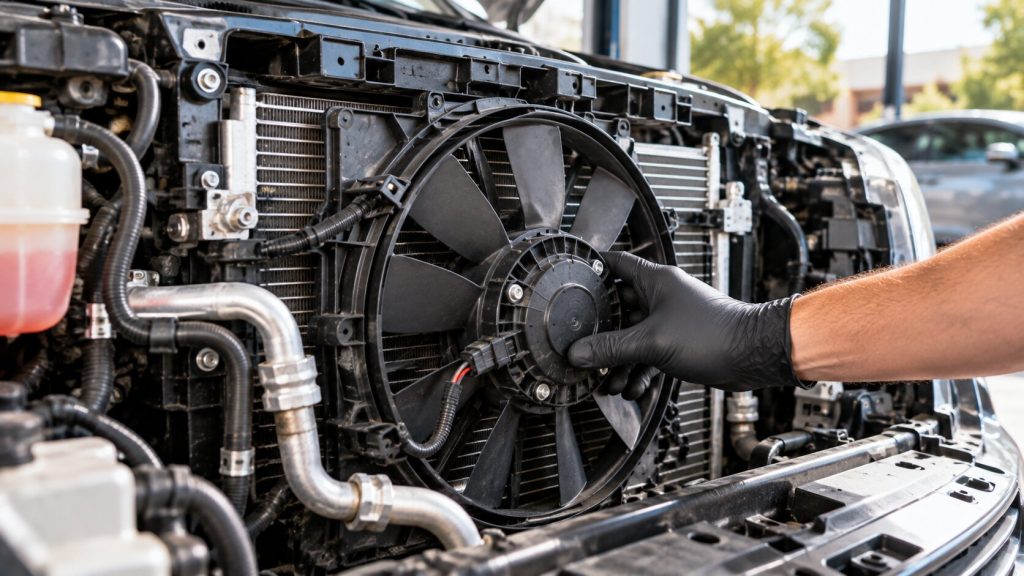
Here is where many hot-weather cooling complaints actually come from. The condenser sits at the front of the car and sheds the heat the AC pulls from the cabin. At highway speed, airflow handles that naturally. At idle, in a pickup line, the electric condenser fan is the only thing moving air across it.
This explains a symptom drivers often misread. If the AC blows cold while moving but goes warm while sitting still, the refrigerant charge may be fine and the real issue is a condenser fan that is slow, weak, or not spinning at full speed. The cooling did not fail. The airflow that supports it disappeared at a standstill.
We verify that the electric fans reach their proper speeds precisely because so much rideshare time is spent idling. A fan running below strength is easy to miss until a hot afternoon in a stationary car makes it obvious to both driver and passenger.
Keeping a Hard Working System Sharp
A few simple habits keep a high-mileage system performing when the heat is on. Start by venting the trapped heat before you cool, then move to recirculation once the cabin feels comfortable. Through the shift, pay attention to whether the AC stays cold at idle and not only while you are moving, since warm air that shows up only when stopped is usually a cue to have the condenser fans checked.
A little upkeep rounds it out. Keep the condenser and front grille clear of bugs and debris that choke airflow, and have the refrigerant charge verified if the cooling gradually weakens over a few weeks. Folded into a normal maintenance rhythm, these take little time and head off the breakdowns that cost a driver a full shift during the busiest season.
Schedule an Appointment to Keep Your Cabin Cool All Shift
If your car earns its miles shuttling passengers around Meridian, a quick AC check keeps the cabin comfortable and the car dependable through long summer days. Confirming your condenser fans and charge early means fewer warm-air surprises when you are parked and waiting on a fare.
We are happy to verify your system and give you a clear picture of where it stands. Schedule an appointment with John’s Auto Care Center at (208) 974-5216, or stop by 499 S Meridian Rd, Meridian, ID 83642. Our air conditioning service keeps high-mileage cars cooling the way passengers expect.
Frequently Asked Questions
Does recirculation mode actually cool a car faster?
Yes, once the cabin is already cool. It re-cools interior air with less effort, though fresh air is better for that first moment of clearing trapped heat.
Why does my AC blow warm only when I am stopped?
Usually a condenser fan issue. At idle the fan does the airflow work, so a weak or slow fan shows up as warm air while stationary even when charge is fine.
Is it bad to run the AC on recirculation all the time?
Not harmful, but fresh air is useful briefly to clear heat soak and keep the cabin from feeling stale. The best approach alternates based on conditions.
Does sitting in the sun between fares really strain the AC?
Yes. Each cooldown from a heat-soaked cabin is demanding work, and repeating it all day is much harder on the system than steady driving.
How often should a high-mileage rideshare car have its AC checked?
More often than an average car. Given the idling and constant cooldowns, a check at least once before summer helps catch wear early.