


Ever hit the brakes on your Audi while cruising down Eagle Road and felt a strange squeak or vibration? You’re not imagining it — Audi brakes are precise machines, and they’ll start giving subtle warnings long before something serious happens. The problem is, most of us don’t recognize those early signs until the repair bill shows up.
If you live in Meridian, ID, learning how to diagnose Audi brake issues yourself can save a lot of time, stress, and money. With just a few minutes and some basic observation, you can spot small problems before they turn into big ones — keeping your Audi safe and smooth on Idaho’s busy roads.
What’s Really Going On with Your Audi’s Brakes
Diagnosing brake issues isn’t about being a mechanic — it’s about noticing small changes before they become problems. Pay attention to:
- Sounds: Squeaks or grinding
- Feel: Soft or vibrating pedal
- Response: Longer stopping or pulling
As one local tech says, “Brakes always warn you before they fail — you just have to listen while they’re whispering.”
Why Meridian Drivers Notice Brake Problems So Often
Driving around Meridian is harder on brakes than you might think. Between the stoplights on Eagle Road, heavy traffic by The Village, and frequent runs toward Boise on I-84, your brakes are constantly at work.
- Hot summers can glaze your pads, causing them to squeak and lose grip.
- Cold winters bring moisture, which rusts metal and reduces braking power.
- Stop-and-go traffic heats rotors again and again, sometimes warping them over time.
Even high-quality Audi brake systems wear faster in these conditions — it’s just the reality of driving here.
Quick Home Inspection Tips for Your Audi’s Brake System
You don’t have to get dirty or pull your car apart. Just follow these five steps and note what you find.
Listen to the Sounds Your Brakes Make
Your ears are your first diagnostic tool.
- Squealing usually means your pads are wearing down.
- Grinding means you’re past the pads — metal is rubbing on metal. That needs attention right away.
- Clicking or rattling can mean a loose clip or hardware issue.
Mechanic tip: “A soft squeak on a cold morning might be fine. However, a squeak at every stoplight is a sign it’s time to look closer.”
If the noise changes with speed or disappears when you release the brake, mention that to your technician — it’s an important clue.
Pay Attention to Pedal Feel
Your brake pedal should feel steady and predictable. If something changes, that’s worth noting.
- A soft pedal often points to air in the lines or a fluid leak.
- A hard pedal may mean a problem with the brake booster.
- A pulsating pedal usually means your rotors are warped.
Try this quick check: while parked, press and hold the brake pedal. If it slowly sinks toward the floor, there’s likely a fluid issue that needs professional attention.
Check the Brake Fluid
Open your Audi’s hood and find the brake fluid reservoir, typically located toward the rear of the engine bay and clearly labeled for easy identification. The fluid should look clear to light yellow. If it’s dark, cloudy, or sludgy, it’s past its lifespan.
Brake fluid naturally absorbs moisture from the air — especially during Meridian’s humid winters — which can cause corrosion inside the system and reduce braking power. A good rule of thumb is to replace the fluid every two years.
Simple way to remember it: Clear = good. Brown = bad.
Watch How the Car Behaves When You Brake
Your Audi should stop in a straight line, without drama. If it pulls left or right, you could have a sticky caliper or uneven pad wear.
A shaking steering wheel or vibrating pedal usually points to warped rotors — something that happens when brakes get overheated from long downhill drives or constant stop-and-go traffic.
If you see the ABS or Brake Warning Light on your dashboard, don’t panic. It doesn’t always mean a big problem. A quick scan with an affordable OBD-II reader can tell you what the system detected.
Take a Quick Look at the Pads and Rotors
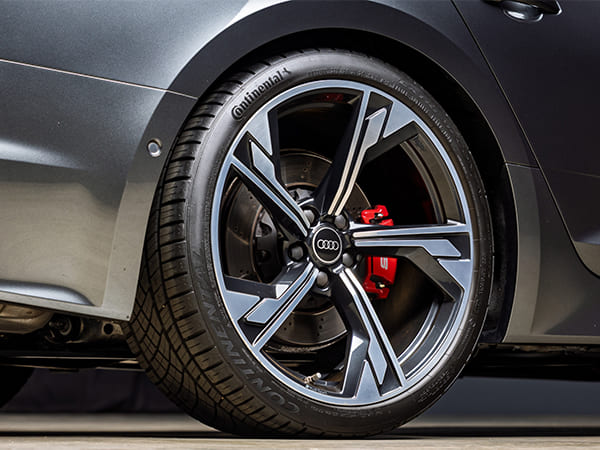
Grab a flashlight and peek through your Audi’s wheel spokes. You’ll see the pads pressed against shiny metal rotors. If the pads look thin — less than ¼ inch — it’s time to replace them.
Rotors should be smooth and silver; if they appear discolored, grooved, or bluish, it means they’ve been overheating — usually because the brake pads are worn or sticking.
Mechanic insight: “When rotors turn blue, they’re telling you they’ve had enough heat for one lifetime.”
Common Brake Symptoms and What They Mean
| Symptom | Possible Cause | What To Do |
| Squealing noise | Worn pads | Replace pads soon |
| Grinding | Metal-on-metal contact | Stop driving and tow |
| Pedal feels soft | Air or fluid leak | Check and top off fluid |
| Pedal vibrates | Warped rotors | Schedule brake service |
| Car pulls sideways | Caliper imbalance | Inspect both front brakes |
| Brake light on | System fault | Scan or inspect right away |
Keep this chart handy — it’s a quick reference when something feels off.
Real-Life Example: Emily’s Brake Wake-Up Call
Emily, who drives her Audi through Eagle Road every day, noticed a soft squeak when braking. She brushed it off — we’ve all done that. A week later, that little squeak turned into a loud grind.
- Problem: The brake pads wore out and chewed into the rotors.
- Result: A simple fix turned into an expensive repair.
Lesson: “If your car whispers, don’t wait for it to scream.” Catching it early saves cash — and stress.
What the Numbers Say About Brake Safety
- A 2024 study shows brake failures cause about 42% of mechanical-related crashes.
- Industry reports note that around 1 in 5 car accidents involve brake issues.
- The NHTSA confirms brakes are among the most frequently recalled safety components.
Bottom line: The data proves it — paying attention to early brake signs can prevent accidents and costly repairs.
Key Takeaway: Listen, Look, and Act Early
Knowing how to diagnose Audi brake issues gives you more control and peace of mind. Listen for new sounds, notice pedal changes, and check your fluid regularly.
A few minutes of attention can help you avoid hundreds of dollars in repairs — and more importantly, keep your family safe on Idaho’s roads.
Time for Professional Brake Care in Meridian, ID?
Knowing how to diagnose Audi brake issues can help you spot early warning signs, prevent major repairs, and keep your drives around Meridian safe and smooth. Regular checks on brake sounds, fluid levels, and pedal feel go a long way in maintaining your Audi’s performance.
Ready to schedule your brake inspection? Contact John’s Auto Care Center, where skilled technicians handle Audi brake repairs, transmission service, diagnostics, and preventive maintenance with precision and care.
Frequently Asked Questions
Why do my Audi brakes squeak early in the morning?
Overnight moisture can create a thin layer of rust on rotors. It usually clears up after a few stops once things warm up.
Is it okay to drive if my Audi brake light blinks once?
If it happens once, it might be a sensor hiccup. But if it keeps flashing, schedule a quick scan — it could be a warning sign.
How long do Audi brake pads last in Meridian traffic?
Usually 30,000–50,000 miles. Stop-and-go driving shortens that lifespan, so checking every oil change is a smart move.
Why does my Audi shake when braking downhill?
That’s rotor warping from heat buildup. Use lower gears to control speed and give your brakes time to cool.
Do I need to replace all four brakes together?
Not always. It depends on wear levels. A technician can measure them and replace only what’s needed.
