AC compressor seizure prevention is far cheaper than replacement, and most seizures trace to causes that regular service catches early. One of the most destructive is liquid slugging, where liquid refrigerant reaches a compressor built only to pump vapor. Catching the conditions that lead to it protects the most expensive part of the system.
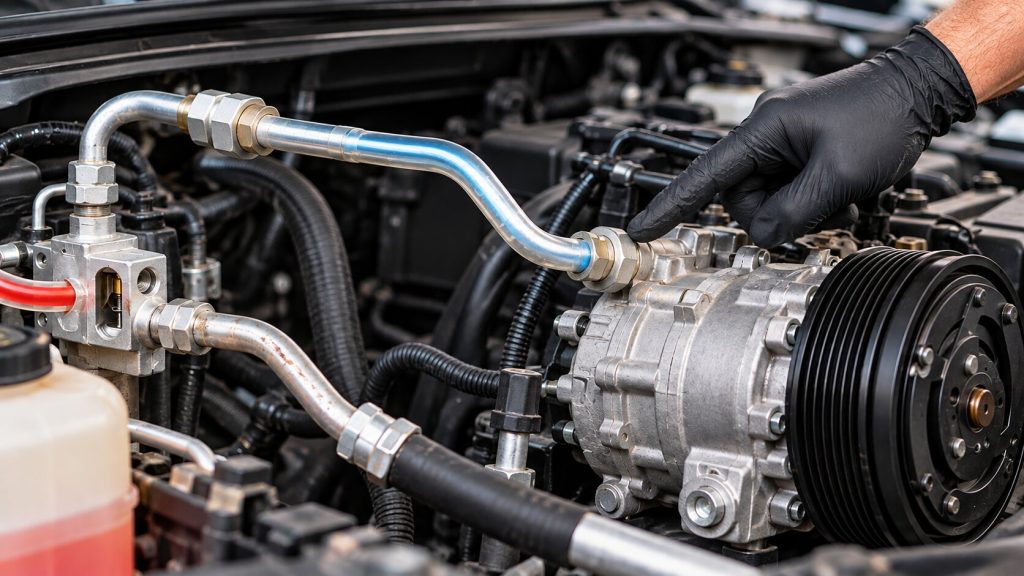
Why the Compressor Is the Part You Protect First
Every air conditioning repair conversation eventually comes down to the compressor, because it is both the heart of the system and the most expensive component in it. It is the pump that moves refrigerant through the entire loop, and when it fails, the cost is in a different category than almost any other AC repair.
That economic reality is the whole case for prevention. A fresh cabin filter, a correct charge, or an early leak repair costs a fraction of what a seized compressor does, and those small services are often exactly what keeps the compressor alive. Spending a little on maintenance is usually spending to avoid the one repair nobody wants.
So when we talk about protecting an AC system, we are really talking about protecting the compressor. Most of the preventative work that matters is aimed, directly or indirectly, at keeping that one part healthy.
What Liquid Slugging Actually Is
To understand the risk, it helps to know one basic fact about how a compressor is built. It is designed to compress refrigerant in its gas form, not its liquid form. Gas compresses. Liquid does not. That single difference is the root of one of the most damaging failures a compressor can suffer.
Under normal operation, refrigerant has fully changed to a vapor by the time it returns to the compressor inlet. Liquid slugging is what happens when liquid refrigerant reaches that inlet instead. The compressor tries to squeeze something that will not compress, and the mechanical stress of that can be severe.
Unlike a slow leak that fades cooling over weeks, slugging can cause sudden, catastrophic failure. The damage is mechanical and often immediate in the worst cases, which is what makes the conditions behind it worth understanding and preventing rather than reacting to.
How a Failing Expansion Valve Sets It Up
Liquid slugging rarely comes from nowhere. One of the common culprits is the expansion valve, the component responsible for metering refrigerant into the evaporator at the right rate so it can absorb heat and fully boil off into vapor before heading back to the compressor.
When that valve fails or sticks open, it can flood the evaporator with more liquid refrigerant than can turn to vapor. The excess stays liquid, travels back along the return line, and arrives at the compressor inlet still in the form the compressor cannot handle. The valve problem upstream becomes a compressor problem downstream.
This is the distinction that makes diagnosis matter. The compressor is where the damage shows up, but the expansion valve may be where the fault actually lives. Replacing a seized compressor without addressing the valve that caused it invites the same failure to happen again to the new part.
Why Early Service Is the Real Prevention
The encouraging part is that the conditions leading to slugging usually announce themselves before the compressor is destroyed. A system that is overcharged, a valve that is beginning to misbehave, or refrigerant levels that are off all tend to leave signs a technician can read during routine service.
We watch for the things that precede this kind of failure. Pressures that do not look right for the conditions, a compressor that sounds or behaves unusually, frost showing up where it should not, or cooling that swings between fine and poor can all hint that refrigerant is not changing state the way it should somewhere in the loop.
Catching any of that early is the entire economic argument for maintenance. It is the difference between adjusting a charge or replacing a valve, and replacing the single costliest part in the system along with everything the failure takes with it.
What an Owner Can Notice Before a Failure
A driver will not spot liquid slugging directly, but the surrounding symptoms are noticeable if you know to pay attention. New or unusual noises when the AC engages, cooling that has become inconsistent, or a system that short cycles on and off more than it used to are all worth mentioning rather than waiting out.
Those observations help us more than they might seem to. A driver who reports a new sound or an odd cooling pattern early gives us the chance to investigate while the fix is still small. The same symptom ignored for a season can arrive as a failed compressor instead.
If something about the system has changed, it is worth a look before the next heavy-use stretch. Our air conditioning diagnostics and repair work begins with those early signals, then verifies pressures and component behavior so a small, fixable issue does not become the expensive one.
Schedule an Appointment to Protect Your Compressor
If your AC has been making new noises or cooling unevenly, an early check is one of the smartest and most economical things you can do for the system. Confirming the charge and the components now is far cheaper than replacing a compressor later, and it keeps the car comfortable and dependable in the meantime.
We are glad to inspect the system and give you a clear, honest picture of its health. Schedule an appointment with John’s Auto Care Center at (208) 974-5216, or stop by 499 S Meridian Rd, Meridian, ID 83642.
Frequently Asked Questions
Is replacing a compressor really that much more expensive than maintenance?
Yes. A compressor is the costliest part of the AC system, so the small services that help prevent its failure are far cheaper by comparison.
Can liquid refrigerant actually break a compressor?
Yes. Compressors are built to pump vapor, not liquid, and liquid reaching the inlet creates mechanical stress that can cause serious damage.
Should a bad expansion valve be replaced even if the compressor seems fine?
Often yes. A failing valve can feed liquid to the compressor over time, so addressing it protects the more expensive part from future harm.
Will topping off refrigerant prevent compressor problems?
Not reliably, and overcharging can actually contribute to them. Correct charge and proper diagnosis matter more than simply adding refrigerant.
What early signs suggest a compressor is at risk?
New noises on engagement, inconsistent cooling, or frequent short cycling are worth having checked, since they can precede a more serious failure.