Fleet vehicle AC reliability depends on protecting refrigerant lines from road damage and maintaining compressors built for heavy duty cycles. Service vans run their air conditioning far longer than personal cars, so small weaknesses turn into summer breakdowns. Consistent inspection of lines, charge, and compressor health keeps vans on the road.
Why Fleet AC Wears Differently Than a Personal Car
A service van spends its day doing the one thing that is hardest on an air conditioning system. It runs long routes with the AC on for hours, idles at stop after stop, and sits in direct sun while a driver loads and unloads. That pattern asks the compressor to engage and disengage far more often than a commuter car ever will.
We see the difference clearly across a fleet. Two vans of the same year and model can show very different AC health simply because one runs tighter delivery loops with more idling. The system is not defective. It is doing more work, and heavier work exposes weak points sooner.
Summer in the Treasure Valley adds to that load. When ambient temperatures climb, the system has to pull more heat out of the cabin with less help from outside air, so any existing weakness starts showing up as reduced cooling by the afternoon.
The Hidden Risk in Unprotected Refrigerant Lines
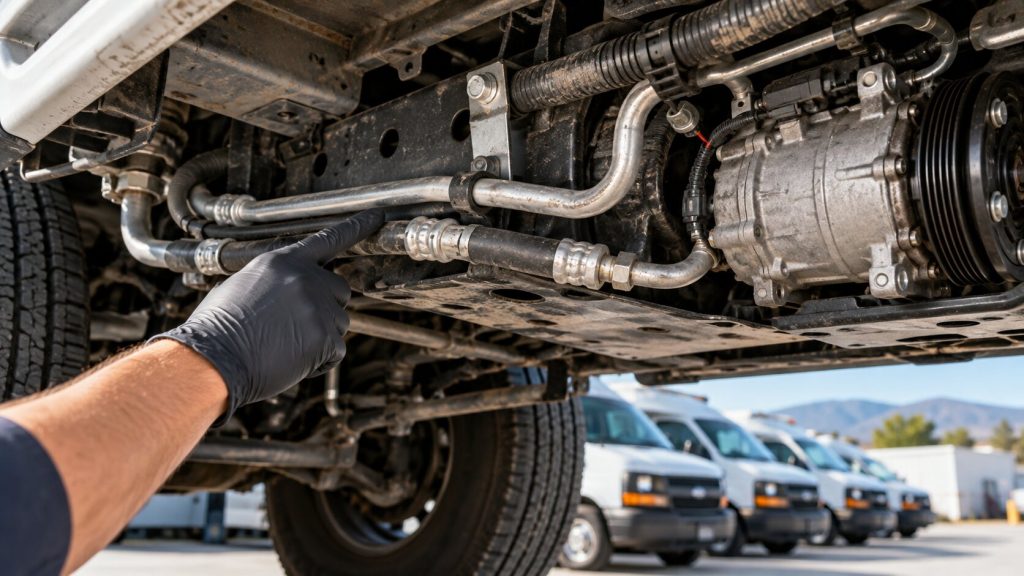
The part of the system that fails quietest is usually the refrigerant lines, especially the long runs that travel under the vehicle. On a van loaded with tools and cargo, vibration is constant, and a line that rubs against a bracket or frame edge will slowly wear through its protective layer. Road debris, gravel, and salt on winter routes speed that along.
This is where a useful distinction comes in. A van that cools well first thing in the morning but fades by midday is often losing a small amount of refrigerant through an abraded or pinhole leak, not suffering a failing compressor. The symptom looks the same to a driver, yet the cause and the fix are very different.
Protecting these lines physically is low cost and high return. Securing loose sections, replacing worn insulation, and keeping lines clear of sharp contact points prevents the slow leaks that take a van out of service during the busiest weeks of the year. For a fleet, one protected line today is one avoided breakdown in July.
What Heavy Duty Compressor Maintenance Actually Looks After
The compressor is the component carrying the heaviest workload in a fleet system, and it depends on two things that quietly go wrong. It needs the correct refrigerant charge and proper oil circulation. When charge drops from a slow leak, the compressor loses some of the lubrication that moves with the refrigerant, and running it in that state wears it far faster than normal use would.
We pay attention to how the compressor clutch engages. A clutch that cycles rapidly, hesitates, or makes noise on engagement is telling us something about charge level or electrical health before the system stops cooling entirely. Catching that signal early is the difference between a maintenance visit and a replacement.
Heavy duty maintenance is less about dramatic repairs and more about keeping the charge correct, confirming the compressor is lubricated, and verifying the clutch and controls respond cleanly. Done on a schedule, it keeps the most expensive part of the system healthy.
A Practical Inspection Blueprint for Fleet Managers
A fleet does not need a complex program to stay ahead of AC failures. A short, repeatable check during regular service covers most of the risk.
- Inspect refrigerant lines for chafing, worn insulation, and contact with brackets or frame edges
- Confirm refrigerant charge is within spec, since a slow decline is the earliest warning of a leak
- Watch compressor clutch engagement for hesitation, rapid cycling, or unusual noise
- Check the condenser for debris, bent fins, and road damage that reduce cooling at idle
- Note cabin cooling performance by afternoon, not just at the start of a shift
Running this at predictable intervals lets small issues surface while they are still cheap to correct. It also gives you a record across the fleet, so you can see which vans are trending toward a problem.
What Drivers and Dispatchers Can Watch For
The people who notice AC trouble first are rarely in the shop. A driver feels cooling fade on a hot run, hears a new noise when the clutch kicks in, or smells something musty from the vents. A dispatcher hears the same complaints repeat on the same van.
Those observations are genuinely useful to us. When a driver reports that cooling weakens only under load or only late in the day, that pattern points us toward specific causes before the van is even on the lift. Encouraging drivers to flag early changes turns them into an informal first line of inspection.
When a van reaches that point, our approach to vehicle air conditioning diagnostics and repair starts with reading those symptoms, then verifying charge, lines, and compressor health rather than guessing. The goal is a clear answer and minimal time off the route.
Schedule an Appointment to Keep Your Fleet Running Cool
If your service vans are logging long summer hours, a scheduled AC check keeps them comfortable and dependable through the season. Catching a worn line or a low charge early is far easier than pulling a van mid route, and it keeps your crews productive on the hottest days.
We are happy to look at one van or set up a check across your fleet. Schedule an appointment with John’s Auto Care Center at (208) 974-5216, or stop by 499 S Meridian Rd, Meridian, ID 83642.
Frequently Asked Questions
Can a fleet van still blow slightly cool air when the AC system has a problem?
Yes. A system low on refrigerant often produces mild cooling that fades under heat or load, which is why partial cooling should still be checked rather than ignored.
Is it normal for AC performance to drop only in the afternoon?
Yes. Afternoon fade usually points to a small charge loss or a system working at its limit in peak heat, both of which are worth inspecting early.
Does idling at delivery stops affect AC wear?
Yes. Frequent idling increases compressor cycling and reduces airflow across the condenser, so high-stop routes tend to wear systems faster.
Can refrigerant lines really be damaged by normal road use?
Yes. Vibration, debris, and contact with frame edges can wear a line over time, creating slow leaks that are common on high mileage service vans.
Should every van in a fleet be inspected on the same schedule?
Yes. A consistent interval makes it easier to spot which vans are trending toward trouble and keeps the whole fleet predictable.