R-1234yf air conditioning systems in post-2018 vehicles are prone to condenser fractures in high-desert climates due to extreme thermal cycling. In Meridian, Idaho, rapid temperature swings cause aluminum fittings to expand and contract, creating microscopic leaks. Effective R-1234yf leak detection requires specialized hydrogen/nitrogen tracer gas analysis to prevent total compressor seizure and internal system contamination.
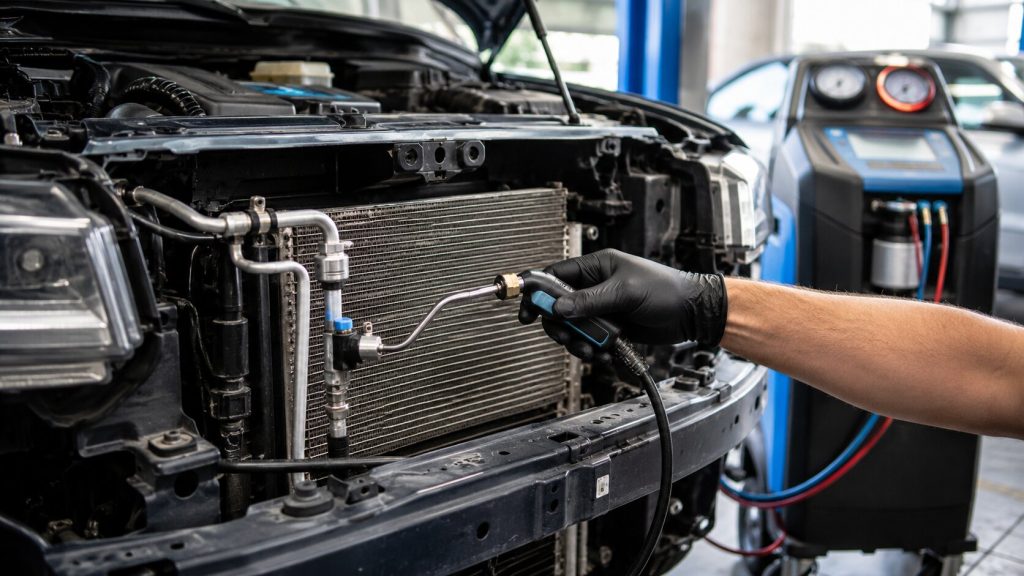
In Meridian, the daily 40-degree temperature swing between chilly spring mornings and 100-degree afternoons is systematically cracking the aluminum fittings on your vehicle’s condenser. If your AC hits a wall by mid-afternoon in Paramount, don’t assume you’re just low on gas; your condenser fittings are likely failing from metal fatigue. Unless you use precise R-1234yf leak detection to seal these micro-fractures, you are on a fast track to a seized compressor and a massive repair bill.
Understanding Thermal Fatigue in Refrigerant Infrastructure
R-1234yf systems are unforgiving. Because these systems run at higher pressures, they don’t handle the ‘breathing’ of our high-desert climate well. In Meridian, the rapid transition from chilly spring mornings to 100-degree afternoons forces the aluminum lines to expand and contract aggressively. That constant thermal cycling creates metal fatigue at the brazed joints—which is where the refrigerant inevitably escapes.
The system relies on consistent internal pressure for the phase change from liquid to gas. During extreme heating, the metal expands; at night, it retracts. Over several seasons, this constant mechanical stress leads to metal fatigue at brazed joints.
Refrigerant escapes through microscopic pores known as witness marks. If the system drops below critical mass, compressor oil fails to circulate, resulting in internal scoring of pump cylinders. Because the refrigerant is slightly flammable, engineers designed these systems with rigid containment requirements. A minor leak risks catastrophic failure of the pumping unit.
Diagnostic Workflow for Micro Leaks
Standard visual inspections often miss the source of an R-1234yf leak. I follow a three-stage process to isolate these elusive points of failure.
- Electronic Sniffing: I deploy a calibrated leak detector tuned for the HFO 1234yf molecule. I sweep the low- and high-side lines, focusing on service ports and the condenser front face.
- Tracer Gas Injection: If the electronic sniffer shows no results, I recover the refrigerant and pull a vacuum. I then introduce a nitrogen and hydrogen mixture. Hydrogen molecules are smaller than refrigerant molecules, allowing them to escape through the tiniest cracks in the evaporator core located deep inside the dashboard.
- Ultrasonic Analysis: I use an ultrasonic detector to listen for the high frequency sound of escaping gas. This is effective for hidden leaks in the firewall or behind the dash where visual access is impossible.
The Science of Refrigerant Containment and EPA Standards
R-1234yf offers low global warming potential but increases system complexity. Because the gas is mildly flammable, the automotive industry shifted toward integrated piping and modular condenser designs. In our high-desert environment, these design choices create unique points of failure.
When you lose a small amount of refrigerant, the system’s ability to regulate internal temperature diminishes. R-1234yf systems are programmed to trigger safety shutoffs or performance throttles when pressure drops by even a few percentage points. This is why a leak often presents as intermittent cooling rather than a sudden total loss. A system that blows cold at night but warms up at midday is a primary indicator of low refrigerant pressure struggling to maintain a phase change.
Why High Desert Micro Climates Accelerate Corrosion
Meridian experiences intense UV exposure and rapid cooling. The aluminum used in modern heat exchangers is prone to galvanic corrosion when it meets road grit and moisture.
During spring, road salt and moisture collect in condenser crevices. Afternoon heat evaporates the moisture, concentrating salts against aluminum fins. This creates a corrosive environment that eats through the metal’s protective oxide layer. I have seen many vehicles from the Paramount area where the condenser looked intact, yet internal pressures were venting through dozens of tiny, salt-induced pinholes.
Diagnostic Verdict: If your AC blows cold at 6:00 a.m. but quits by 2:00 p.m., don’t just recharge it. That’s a classic signature of a thermal-cycled condenser fracture, not a simple low charge.
Managing System Lubrication and Internal Health
The health of your air conditioning system is linked to the quality and volume of compressor oil. When a leak occurs, the pressure drop causes oil to settle in the lowest points of the system, such as the bottom of the evaporator or the bends in the hard lines.
Without circulating oil, moving parts of the compressor make metal-on-metal contact. This creates microscopic shavings that clog the expansion valve. Once the valve blocks flow, the resulting pressure differential leads to internal compressor overheating and eventual mechanical seizure.
We prioritize a full system flush and vacuum test during every leak repair. We utilize recovery machines that separate contaminated oil from the system, allowing us to measure and replace the exact lubricant volume required. This precision ensures the system lasts for years rather than failing before the next season.
Addressing Secondary Damages
Once the refrigerant level drops below 70 percent, the compressor overheats. The lubricant loses viscosity as it becomes saturated with moisture entering through the leak point. This turns the oil into a corrosive sludge that pits internal pump components.
Replacing a condenser is a manageable repair. Replacing a seized compressor, contaminated evaporator core, and flushed lines is a major project. EPA mandates strict recovery procedures for R-1234yf, making DIY cans illegal and ineffective. These systems require specialized equipment that balances the charge to the gram.
Professional Support for Meridian Drivers
Waiting for a complete system failure is a gamble. I see plenty of vehicles that had a ‘quick top-off’ at a generalist shop, only to blow warm again a week later. These systems don’t need a quick fix, they need a precise leak identification. At John’s Auto Care Center, I don’t just ‘charge’ systems—I isolate the specific point of failure using tracer gas and ultrasonic detection. If you want the leak found and the system sealed before the next heat wave, that’s exactly what I specialize in.
We are located at 499 S Meridian Rd, Meridian, ID 83642. Schedule your specialized R-1234yf leak diagnostic appointment here today to ensure your cooling system remains intact before the next heat wave hits Meridian.
Frequently Asked Questions
Is it safe to drive with a low refrigerant level?
No, driving with low refrigerant causes the compressor to overheat and circulate debris. This leads to premature component failure that is significantly more expensive to repair than a simple leak.
Can I use generic leak stop products?
No, these products often clog small expansion valves and service equipment. They do not fix the structural cause of the leak and will likely result in a voided warranty and additional labor costs.
Why does my car need a special gas to find the leak?
The molecular structure of R-1234yf is different from older gases, making it harder to detect with standard equipment. Using a tracer gas allows me to find microscopic leaks hidden behind vehicle trim.
Does the high desert heat really cause these failures?
Yes, the extreme temperature swings in Meridian create constant expansion and contraction of aluminum components. This thermal cycling is the leading cause of material fatigue in modern cooling systems.