If your Audi’s steering wheel suddenly feels heavier, squeals when you turn, or leaves mysterious red or amber spots on the driveway, it’s usually not “just getting older.” It may be a power steering leak, and catching it early can save you a lot of stress and keep your Audi feeling smooth and responsive.
Here in Meridian, ID, where commutes along Eagle Road or quick trips down Fairview are part of everyday life, diagnosing Audi power steering leaks quickly is a key part of keeping your Audi safe and comfortable. Let’s walk through how to spot the problem like a pro, what to watch for on local roads, and when it’s time to let a trusted technician take a look.
What Is a Power Steering Fluid Leak?
A power steering leak simply means your Audi is losing the hydraulic fluid that helps you turn the wheel smoothly. When the system is healthy, steering feels light and quiet—even in tight spots around The Village at Meridian.
Diagnosing Audi power steering leaks involves:
- Finding where the fluid is escaping
- Pinpointing which part is failing (hose, pump, rack, reservoir, seal)
- Determining how serious the leak is
Even small leaks matter. Low fluid can lead to:
- Heavy steering
- Whining or groaning noises
- Damage to the pump or steering rack
Catching it early prevents a minor issue from becoming an expensive repair.
How to Check for a Power Steering Leak at Home
You don’t need to be an Audi master tech to spot early warning signs. With a little patience, you can catch most leaks right at home.
Start With a Clean Parking Spot
- Park your Audi on a flat, dry surface, like your driveway or garage.
- If the ground already has stains, slide a piece of cardboard under the front of the car.
- Let it sit overnight for the clearest result.
Mechanic’s tip: Mark the cardboard with front/back and left/right. This makes it easier to figure out exactly where a leak might be coming from.
Inspect Any Fluid Spots
Power steering fluid has some distinct traits:
- Color: Usually red, amber, or light brown
- Texture: Slick and oily, not watery
- Location: Typically under the front-third of the car, often near one side
If the fluid looks darker, thicker, or burnt, you may be looking at engine oil instead. Bright green or orange? That’s probably coolant. The more it resembles light hydraulic oil, the more likely it’s a power steering leak.
Check the Power Steering Fluid Level
Most Audis—especially older models—have a power steering reservoir under the engine cover.
- Wait until the engine is cool.
- Locate the reservoir (usually marked clearly).
- Remove and wipe the cap.
- Reinsert and check the MIN and MAX lines.
If the fluid is hovering around MIN or below it, that’s a sign the system is losing fluid somewhere.
Important: If you’ve topped off the fluid more than once and it keeps dropping, you almost certainly have an active leak—even if you can’t see where it’s coming from yet.
Listen for Noises While Turning
Start the car and turn the wheel slowly:
- Full left
- Full right
Listen for:
- Whining
- Groaning
- Squealing
These noises often show up at low speeds—like when you’re parking at Fred Meyer or rolling through a tight drive-thru lane.
If the system is pulling in air because of low fluid, the pump will complain. That sound is your early warning.
Inspect Visible Hoses and Connections
If you’re comfortable taking a closer look:
- Grab a flashlight
- Check hoses, clamps, and metal lines leading from the pump and reservoir
- Look carefully for wet spots or shiny patches
- Inspect hose connection points
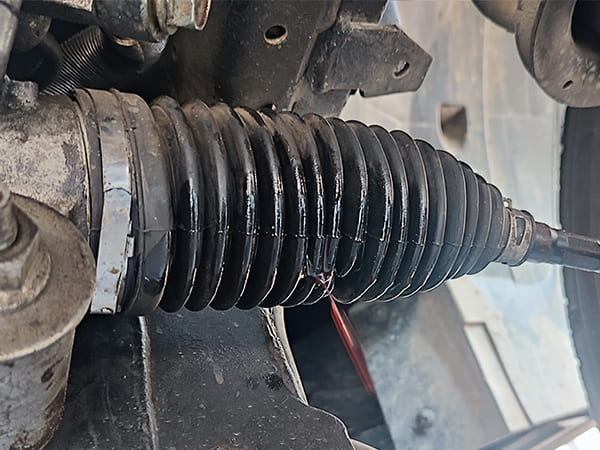
- Look at the steering rack boots (the rubber bellows near the wheels)
What you’re looking for:
- Damp or wet hoses
- Cracked or swollen rubber
- Fluid tracking down metal lines
- Wetness around the rack boots
If you see fluid around the rack boots, the leak could be inside the rack itself. That one usually calls for professional help.
How a Small Sign Turns Into a Steering Clue
Picture this: It’s a cold January morning in Meridian, and as you back out of the driveway, your Audi gives a faint groan when you turn the wheel. It wasn’t doing that yesterday. Later, you notice a small oily spot where you parked—easy to shrug off, but it’s a sign your system is losing fluid.
By simply checking the fluid level, watching for fresh drips, and noting any changes in steering feel, you can catch a leak early before it turns into a bigger steering problem.
When to Call a Professional (and What They’ll Do)
If any of the following apply, it’s time to get a certified Audi technician involved:
- You’ve topped off the fluid more than once
- You hear ongoing whining or groaning when turning
- Steering feels noticeably heavier
- There are obvious drips under the front of the car
- The smell of burnt fluid is showing up after drives
A professional inspection usually includes:
- UV dye testing to pinpoint small or hidden leaks
- Checking pump shafts, seals, and lines for wear
- Inspecting the steering rack for internal leaks
- Confirming whether the fluid is contaminated or burnt
- Giving clear repair or replacement recommendations
Modern Audi steering systems often mix electronics and hydraulics, so having someone trained in these systems makes a big difference in getting accurate results.
Building Trust With Clear, Honest Diagnosis
A good shop will always:
- Show you exactly where the leak is coming from
- Explain the cause in friendly, easy-to-understand terms
- Offer several options—not just “fix it now”
- Tell you what’s urgent and what’s okay to monitor
If anything feels unclear, ask questions. A trustworthy mechanic won’t just accept them—they’ll appreciate them. It means you’re trying to take care of your vehicle the right way.
Keep Your Audi Handling Its Best
To recap, diagnosing Audi power steering leaks is all about:
- Paying attention to symptoms like heavy steering, noises, and fluid spots
- Checking fluid levels and visible hoses
- Being mindful of how Meridian weather and traffic affect your steering system
- Getting a professional inspection before a small leak becomes a bigger problem
If you’re in Meridian, ID and you’ve noticed any of these warning signs, the team at John’s Auto Care Center can inspect your Audi’s power steering system, pinpoint the exact source of the leak, and walk you through your options with clear, friendly guidance. Whether it’s a faint noise or a small drip, scheduling a quick steering and suspension check is a smart way to stay ahead of bigger issues. Book your power steering leak inspection with us today.
FAQs About Audi Power Steering Leaks
What color is Audi power steering fluid if it’s leaking?
Most Audi power steering fluid is red, amber, or light brown. If you find that under the front of your car, it’s worth checking the system.
Can I keep driving if my Audi has a small power steering leak?
Short distances may be okay, but leaks worsen quickly. Continuing to drive can strain the pump or make the steering dangerously heavy.
Why does my Audi make a whining noise only when I turn the wheel?
This often means the power steering fluid is low or air has entered the system. Both usually come from a developing leak.
How often should I check my Audi’s power steering fluid?
Every few months is smart, especially if you drive between Meridian and nearby cities often. If your Audi has had leaks before, check more frequently.
What’s the most common cause of power steering leaks in older Audis?
Aging hoses and worn seals are the usual suspects—especially in places like Meridian, where weather swings can accelerate wear.