


You hop into your Jeep on a blazing hot afternoon in Meridian, ID, crank up the AC expecting instant relief… and instead, you’re hit with a blast of warm air. Not exactly the cool breeze you were hoping for, right? When your Jeep AC is not cooling, it’s more than just a comfort issue — it can turn every drive into a sweaty, frustrating experience.
The good news? Most AC issues are fixable once you know what to look for. Let’s break down the most common reasons your Jeep’s AC isn’t doing its job — and how to get that cold air flowing again.
What Happens When Your Jeep’s AC Stops Blowing Cold?
Your Jeep’s air conditioning system isn’t just one simple unit — it’s a complex combo of parts that all have to work together just right. When something gets out of sync, cold air stops flowing. The culprit could be anything from low refrigerant to a worn-out compressor or even a misbehaving sensor.
Whether you’re driving a Wrangler, Grand Cherokee, or Compass, the symptoms are usually the same: warm air blowing from the vents, weak airflow, or the AC cutting in and out. Let’s break down what might be causing the trouble.
Why Is My Jeep AC Not Cooling? 5 Likely Reasons
If your Jeep AC is not cooling, you’re probably wondering what went wrong — and how serious (or expensive) it might be. Here are five of the most common issues that could be standing between you and a comfortably cool ride.
1. Low Refrigerant Levels
This is probably the most common issue we see. Refrigerant is the lifeblood of your Jeep’s AC system — it absorbs heat from inside the cabin and releases it outside. If there’s a leak somewhere, the refrigerant level drops, and your system can’t cool effectively.
What to watch for:
- Warm air, even with the AC on full blast
- Frequent recharges needed
- Visible oil or dye near AC lines (if UV dye was used)
2. Compressor Problems
The compressor is like the engine of your AC system. It circulates refrigerant and helps cool your cabin down. If the compressor fails, the whole system shuts down. These parts can wear out over time or get damaged by low refrigerant.
What to watch for:
- Clicking or grinding when the AC kicks on
- AC blows warm no matter the setting
- Compressor clutch not spinning
3. Electrical or Sensor Failures
Modern Jeeps are full of electronics, including sensors that manage everything from temperature regulation to fan speed. If one of these goes bad or starts sending mixed signals, the AC may not know what to do, or shut off as a safety precaution.
What to watch for:
- AC turns off and on unpredictably
- Inconsistent cooling
- Error codes showing up (sometimes a check engine light too)
4. Blocked Condenser or Dirty Cabin Filter
The condenser releases heat absorbed by the refrigerant, and it’s mounted right behind the front grille, where it can easily get clogged with leaves, bugs, and road debris. Similarly, a clogged cabin air filter can block airflow, reducing cooling power.
What to watch for:
- Weak airflow
- Hot air when idling, cooler when driving
- Musty smells are coming from the vents
5. Blend Door or Actuator Issues
Inside your dashboard, small doors (called blend doors) control airflow direction and temperature. If one of these doors sticks or the actuator fails, you might not get cool air at all, even if everything else is working.
What to watch for:
- No cold air on one side of the cabin
- Clicking noises behind the dash
- Temperature is stuck or not responding to changes
How We Diagnose Jeep AC Issues
If your Jeep AC is not cooling, there’s no need to panic — but there is a clear process for figuring out the root of the issue. Here’s how a professional mechanic approaches it:
- Visual Check: Look for leaks, loose connections, and worn-out components.
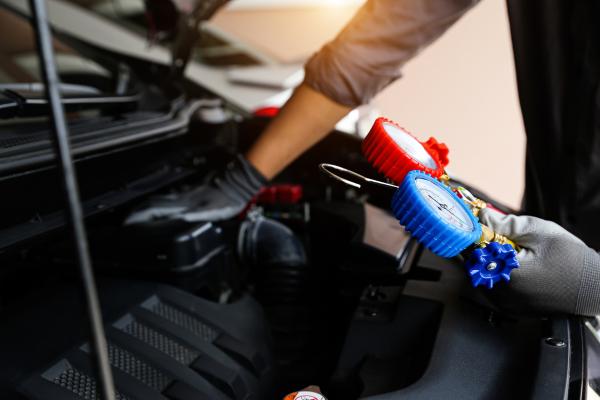
- Pressure Readings: We hook up gauges to check refrigerant pressure. Low pressure? Probably a leak. High pressure? It could be a blockage or a compressor issue.
- Electronic Scan: Using diagnostic tools, we read any fault codes that might point to electrical or sensor problems.
- Component Testing: Fans, actuators, and switches are manually tested to ensure everything is responding correctly.
- Leak Detection Dye: UV dye can help spot small, slow leaks that aren’t immediately visible.
Why It’s Worth Fixing Sooner Than Later
It’s tempting to ignore the problem, especially if you’re still getting some cool air. But waiting often turns a small fix into a much bigger repair. Here’s why it’s smart to address it early:
- Avoid bigger issues. A bad compressor can take out other parts with it.
- Better gas mileage. A struggling AC system can drag on your engine.
- Stay comfortable. Whether you’re commuting through Meridian or heading into the hills, no one likes a sweaty, stuffy ride.
- Maintain resale value. A working AC is a must-have for future buyers.
Jeep AC Not Cooling: Real Fix, Real Story
A customer in Meridian brought in their 2017 Jeep Grand Cherokee. The AC would cool for the first 10–15 minutes, then blow warm air. After a full system check, we found a small refrigerant leak in the condenser and a failing compressor clutch relay. We repaired the leak, replaced the relay, and recharged the system. The AC is now ice-cold, and the customer avoided a complete compressor replacement, saving hundreds.
Data Doesn’t Lie: Jeep AC Issues Are Common
You’re not alone if your Jeep’s AC is not cooling. In fact:
- 60% of Jeep AC problems we see are due to low refrigerant or electronic glitches.
- 2014–2018 Grand Cherokees are particularly known for actuator and compressor issues.
- Repair costs vary: a recharge might be under $200, while a new compressor can run $800–$1,500, depending on the model.
Having this info upfront helps you plan and avoid sticker shock later on.
Let’s Keep Your Jeep Cool — The Right Way
If your Jeep AC is not cooling, there’s no reason to suffer through another hot day in Meridian, ID. Whether it’s a quick recharge, a relay swap, or something more involved, catching the issue early is the best move for your comfort, your wallet, and your vehicle’s long-term health.
For expert help that’s friendly, straightforward, and backed by experience, reach out to John’s Auto Care Center. We’ll help you stay cool — the right way.
FAQs About Jeep AC Troubles
1. Can I just recharge my Jeep’s AC and call it good?
Maybe — but only if low refrigerant is the only issue. If there’s a leak, recharging is just a short-term bandage. You’ll be back in the same hot seat soon unless you fix the root cause.
2. What’s the typical cost to fix Jeep AC problems?
It depends. A minor repair like a relay or sensor might run $100–$300. Major work, like replacing a compressor or fixing internal components, could cost over $1,000. That’s why early diagnosis is key.
3. Why is one side of my Jeep blowing cold and the other warm?
That’s often a sign of a blend door or actuator malfunction. These little motors control airflow and temperature zones. When one fails, you can get uneven temperatures across the cabin.
4. Is it safe to drive with a broken AC system?
Yes, unless the issue involves the serpentine belt or other engine-connected parts. But it’s uncomfortable, and ignoring it can cause long-term damage.
5. How often should I service my Jeep’s AC?At least once a year, ideally before the summer heat hits. A basic check-up can catch leaks, top off refrigerant, and make sure all systems are go.
