Have you noticed your Ford’s tires wearing out faster than they should? Maybe the edges are going bald, or one tire looks oddly different from the others. If that sounds familiar, you might be dealing with one of the most frustrating (and expensive) problems Ford owners face— Ford tire wear issues .
Whether you drive an F-150, Escape, Fusion, or Explorer, premature or uneven tire wear isn’t something to ignore. It affects how your vehicle handles, shortens the life of your tires, and can even be dangerous if left unchecked.
In this guide, we’ll break down what causes these problems, how to spot them early, and—most importantly—how to fix and prevent them. Let’s get into it.
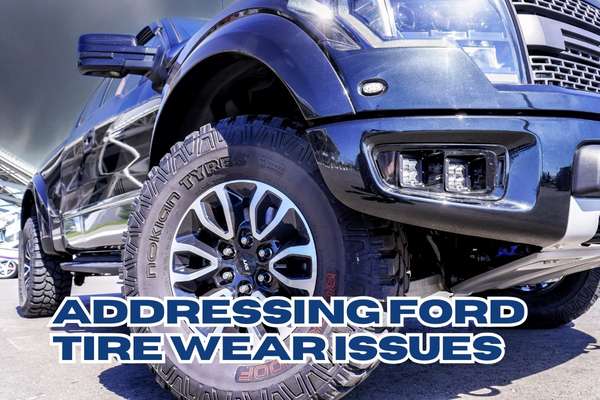
Spotting the Signs of Tire Wear
So, what does tire wear actually look like?
You might think it’s as simple as low tread, but Ford tire wear issues show up in a few different patterns:
- Edge wear: The outside or inside of the tire wears faster than the rest—usually an alignment problem.
- Center wear: The tire wears out in the middle—often from overinflation.
- Feathering or cupping: Uneven ridges across the tread, usually from suspension issues or unbalanced wheels.
- Patchy or diagonal wear: A sign of poor alignment or possibly bad shocks.
If your Ford’s tires don’t look evenly worn—or you feel vibration, hear thumping, or notice your car pulling to one side—it’s time to take a closer look.
What’s Causing Tire Wear on My Ford?
Wondering why your tires are wearing out so fast? Let’s break down the real reasons behind it—because it’s not always just “bad luck.”
Wheel Alignment
This is one of the most common causes of Ford tire wear issues. When your wheels aren’t properly aligned, the tires don’t hit the road evenly. Over time, this causes one side to wear down faster than the other.
Real talk: Even a slight misalignment—like from hitting a curb or a big pothole—can mess things up.
Suspension Problems
Ford vehicles, especially heavier ones like the F-150 or Expedition, depend on strong suspension systems. Over time, parts like shocks, struts, and bushings wear out.
When that happens, the wheels can bounce or shift while driving. That extra movement causes uneven tire contact, leading to scalloped or cupped tires.
Pro tip: If your car feels floaty or the ride’s gotten rougher, it’s worth getting the suspension checked out.
Wrong Tire Pressure
This one’s sneaky. Overinflated tires wear in the center, while underinflated ones wear on the edges. Both can cut your tire life in half.
Always check your Ford’s recommended pressure—it’s usually around 32–35 PSI —and stick to it. There’s a sticker on the inside of the driver’s door with the exact number.
Bonus tip: Check your tire pressure in the morning when the tires are cold for the most accurate reading.
Driving Habits & Load Stress
Let’s be honest—how you drive matters. If you’re hard on the gas, slam on the brakes, or haul heavy loads, your tires are working overtime.
Trucks like the F-150 or Ranger, especially when towing, can develop wear spots faster if the weight isn’t balanced or the suspension isn’t upgraded to handle the load.
OEM Tire Quality
Some factory-installed tires on Ford vehicles just aren’t the best quality. A lot of drivers report Ford OEM tires—especially Goodyear and Hankook—wearing out before 25,000 miles.
If you’re running stock tires and noticing early wear, it might not be you—it could be the tires themselves.
How to Fix and Prevent Tire Wear
The good news? Most Ford tire wear issues are fixable—and preventable—with a few smart habits.
Get Regular Alignments
Getting your wheels aligned every 6,000 to 10,000 miles can make a huge difference. It helps keep your tires wearing evenly and your car handling smoothly.
If you notice uneven tread or your steering feels off-center, don’t wait. Book that alignment.
Inspect and Upgrade Suspension
Got more than 60,000 miles on your ride? It might be time for a suspension check. Worn-out shocks and bushings are often behind those weird wear patterns.
Tip: If you tow, off-road, or drive on rough roads often, consider upgrading to heavy-duty shocks (like Bilstein) for better tire performance and comfort.
Rotate Your Tires Regularly
Rotate your tires every 5,000 to 7,000 miles —ideally with every oil change. It keeps the wear distributed more evenly, especially if you’ve got front-wheel drive (where the front tires work harder).
Check Tire Pressure Monthly
Use a digital gauge and check all four tires at least once a month. Your TPMS (if equipped) is helpful but doesn’t always catch gradual pressure loss.
Invest in Better Tires
If you’re replacing OEM tires, go for quality. Michelin, Continental, and BFGoodrich offer excellent durability and grip. It’s a bigger upfront cost but saves you money and stress in the long run.
Real-World Example: Ford Escape Tire Trouble
Vehicle: 2018 Ford Escape
Problem: Inside edge of front tires wore down within 20,000 miles.
Cause: Misalignment + worn control arm bushings.
Fix: Alignment, new bushings, fresh tires.
Result: Improved ride comfort and tire wear normalized.
This kind of scenario is more common than you’d think. A small issue snowballs into a bigger repair—but it’s preventable with routine checks.
Maintenance Checklist
| Task | Frequency |
| Wheel alignment | Every 6,000–10,000 miles |
| Tire rotation | Every 5,000–7,000 miles |
| Pressure check | Monthly |
| Suspension inspection | Annually or every 60,000 miles |
| Tread depth check | Every 3 months |
Stay on top of this list, and you’ll save hundreds—maybe thousands—over your vehicle’s life.
Frequently Asked Questions
Why do my Ford tires keep wearing unevenly?
It’s likely a mix of alignment issues, suspension wear, or tire pressure problems. Have all three checked to get to the root of it.
Are tire wear problems covered under Ford’s warranty?
Usually, tires are covered by the tire brand’s warranty—not Ford’s. But if tire wear is caused by a defect (like a bad suspension part), it might be covered under your Ford warranty or extended plan.
Can I drive with uneven tire wear?
You can—but it’s not a good idea. It reduces handling, increases blowout risk, and worsens over time.
How much does a tire alignment cost for a Ford?
Expect to pay between $90–$150 . Add more if you need parts replaced, like tie rods or bushings.
What are the best replacement tires for Ford vehicles?
Top choices include Michelin Defender T+H , Continental TrueContact Tour , and BFGoodrich All-Terrain KO2 (for trucks and off-road use).
Wrapping It Up: Stay Ahead of Tire Trouble
Here’s the bottom line: Ford tire wear issues are more than a cosmetic problem. They’re a sign that something’s not working the way it should—whether it’s alignment, suspension, or tire quality.
But with a little attention and a few smart habits, you can keep your tires (and your wallet) in better shape.
Don’t wait until your tires are bald or your steering feels weird. Catch it early. Rotate regularly. Get your alignment checked. And if you’re replacing tires, go for quality.
Your Ford will thank you—and so will your bank account.
Related articles: